
No products in the cart.
Cannabis Education
What Is a Cannabis Leaf? Fan Leaves, Sugar Leaves and More
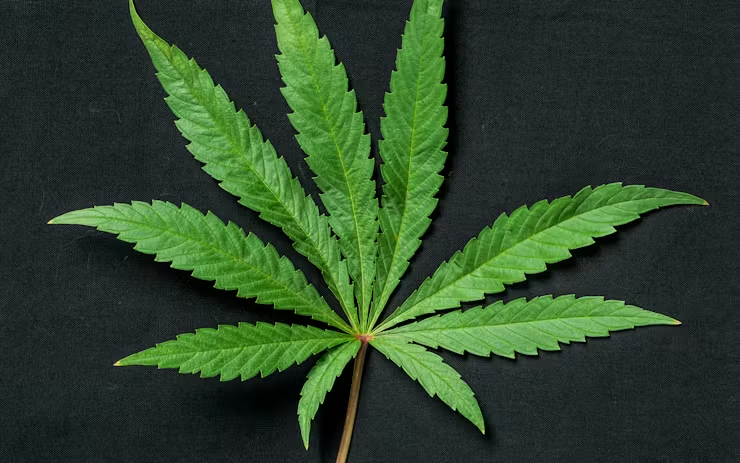
What Does a Pot Leaf Look Like — Essential Cannabis Leaf Guide
What does a pot leaf look like? It is one of the most recognised symbols in the world — and yet most people know surprisingly little about what cannabis leaves actually do, how many variations exist, or what they reveal about the plant’s health. This guide covers everything worth knowing about the cannabis leaf, from its iconic visual shape to its role in cultivation and harvest.
Table of Contents
- What Is a Cannabis Leaf?
- How Many Leaves Does a Pot Leaf Have?
- Indica vs Sativa Leaf Differences
- Fan Leaves vs Sugar Leaves
- What Leaves Tell Growers
- Pot Leaf Images and Identification
- FAQ
What Is a Cannabis Leaf?
The cannabis leaf is probably the most recognised symbol in cannabis culture — and arguably one of the most iconic plant symbols in the world. It is instantly identifiable from its distinctive palmate shape and serrated edges.
Pot leaf pics and images are ubiquitous in pop culture, on clothing, in art and across the internet — but the leaf itself serves a critical biological function beyond its cultural significance.
Leaves act as the solar panels of the cannabis plant — absorbing light and driving photosynthesis, the process by which the plant converts light into energy. Without healthy leaves, the plant cannot grow effectively.
How Many Leaves Does a Pot Leaf Have?
How many leaves does a pot leaf have? The answer depends on the stage of the plant’s growth and its genetics.
Most cannabis leaves have five or seven points — called blades. Some can have nine. The number of blades tends to increase as the plant matures, with seedlings often starting with just one or three blades before developing the fuller, more recognisable multi-blade structure.
The iconic seven-blade cannabis leaf is what most people picture when they think of pot leaf image references in art or culture — though five-blade leaves are equally common in mature plants.
Indica vs Sativa Leaf Differences
The leaf structure varies noticeably between cannabis subspecies.
Indica plants tend to have short, fat leaves with wide blades close together — a compact, dense appearance that reflects the stockier growth structure of the plant overall.
Sativa plants have long, skinny leaves with narrow blades spread further apart — reflecting the taller, more stretched growth pattern characteristic of sativa genetics.
This visual difference is one of the quickest ways to identify the general genetic leaning of a cannabis plant from a distance, though hybrid genetics mean many plants express leaf structures somewhere between these two extremes.
Fan Leaves vs Sugar Leaves
As cannabis buds develop, the plant produces two distinct types of leaves — and understanding the difference matters for both consumers and growers.
Fan leaves are the large, iconic leaves with long stems that extend outward from the plant past the buds. They have little to no trichome coverage because they grow away from the bud sites. Fan leaves are the ones most people picture when they think of a pot leaf drawing or cannabis imagery.
Sugar leaves are the smaller leaves that grow within and around the developing buds. They are fully or partially covered in trichomes — hence the name, as the crystal coating resembles a dusting of sugar. Sugar leaves have a meaningfully higher cannabinoid content than fan leaves as a result.
When a plant is harvested, both leaf types are removed. Fan leaves are typically discarded or composted. Sugar leaves are saved as “trim” — lower in potency than the buds themselves but still usable for pre-rolls, extracts and other products.
What Leaves Tell Growers
Leaves are one of the most important diagnostic tools available to cannabis cultivators. Changes in leaf colour, texture or structure often indicate something significant about the plant’s health.
- Yellowing leaves — often a sign of nitrogen deficiency or natural end-of-life processes
- Dark green or clawing leaves — can indicate nitrogen toxicity or overwatering
- Brown spots or edges — may suggest calcium or magnesium deficiency, or nutrient burn
- Curling or cupping — often related to temperature stress or overwatering
- White powder on leaves — can indicate powdery mildew, a fungal issue requiring immediate attention
- Small holes or stippling — signs of pest activity such as spider mites
Reading the leaves accurately allows growers to diagnose and address problems early — before they affect bud development and final yield quality.
Pot Leaf Images and Identification
If you are looking for pot leaf pics for educational or reference purposes, the most reliable images show the full palmate leaf structure clearly — with all five or seven blades visible, the serrated edges defined, and the distinctive single-stem attachment point at the base.
How do you draw a pot leaf? The basic structure starts with a central blade slightly taller than the rest, flanked by progressively shorter pairs of blades on each side. Each blade is narrow at the base, widens toward the middle and comes to a pointed tip, with serrated edges running along each side. The entire leaf attaches to a single long stem.
Browse Cannabis Flower at your dispensary to see the real thing in person, or explore Concentrates and Pre Rolls for processed cannabis products made from the flower these leaves help produce.
FAQ
What does a pot leaf look like? A pot leaf has a distinctive palmate shape — several long, narrow blades radiating from a central point, all attached to a single stem. Most have five or seven blades with serrated edges. Indica plants tend to have shorter, wider blades, while sativa plants have longer, narrower ones. The leaf is one of the most recognised botanical symbols in the world.
How many leaves does a pot leaf have? Most cannabis leaves have five or seven points — called blades. Some can have nine. The number tends to increase as the plant matures. The iconic seven-blade cannabis leaf is the most recognised, though five-blade leaves are equally common in mature cannabis plants of most varieties.
What is the difference between fan leaves and sugar leaves? Fan leaves are the large, iconic cannabis leaves that extend outward from the plant on long stems. They have little to no trichome coverage and are typically discarded after harvest. Sugar leaves are smaller leaves that grow within the buds, covered in trichomes — making them meaningfully more potent and typically saved as trim for use in extracts and pre-rolls.
Can you smoke fan leaves? Fan leaves have very low trichome content — meaning they contain very little THC or other cannabinoids. Smoking fan leaves typically produces a harsh smoke with minimal effect. Sugar leaves from the bud area have higher trichome content and can be used in extracts or pre-rolls, but the buds themselves always represent the most potent part of the plant.
How do you draw a pot leaf? To draw a pot leaf, start with a central blade slightly taller than the rest, then add pairs of progressively shorter blades on each side — typically two pairs for a five-blade leaf or three for a seven-blade leaf. Each blade is narrow at the base, widens in the middle and comes to a pointed tip with serrated edges. Connect all blades to a single long central stem.
What do pot leaf images tell us about the plant? Pot leaf images used in cultivation contexts often show colour changes, spotting or curling that tell growers about the plant’s health. Yellowing indicates potential nitrogen deficiency. Brown edges suggest nutrient issues. Curling or clawing often points to watering or temperature problems. Healthy cannabis leaves should be vibrant green, firm and free of spots or discolouration.
